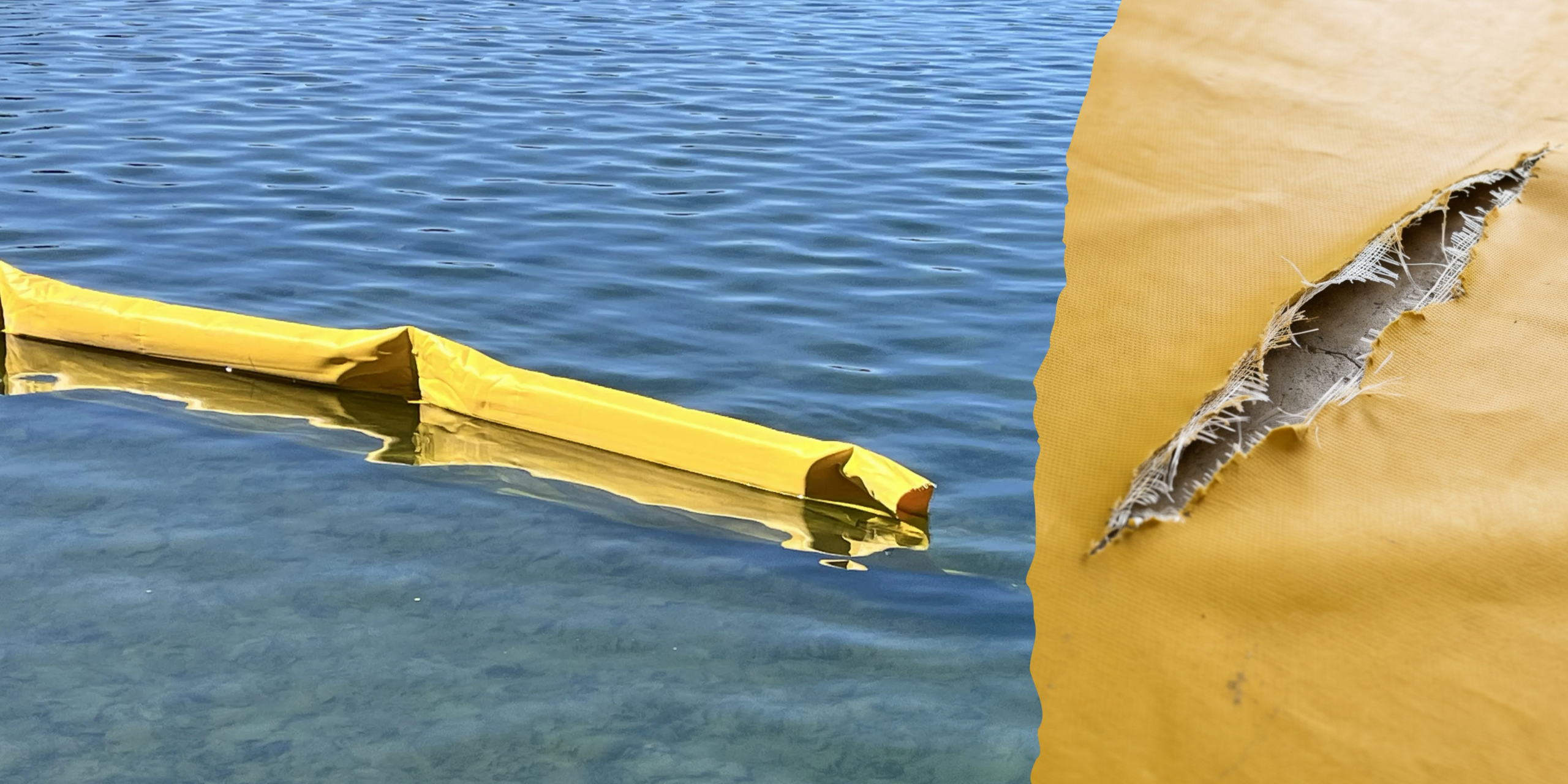
Damage to a turbidity curtain does not automatically mean the entire system needs to be replaced. The right decision depends on where the damage occurred, whether it affects a structural load path, the overall condition of the fabric and hardware, accessibility for repair, and whether the same area has failed before. A small puncture in otherwise sound skirt material may be suitable for a straightforward field repair, while damage involving connectors, cable pockets, stress plates, float pockets, or the ballast hem may require a more detailed technical review or replacement of the affected section.
A repair decision should consider more than the size of a tear. Location, load path, fabric condition, access and recurrence matter. A small puncture in sound skirt material may be a routine repair. A tear through a connector edge, cable pocket, stress plate or ballast hem may require specialized work or section replacement because it affects structural load transfer.
The goal is to restore the turbidity curtain to reliable working condition without creating a weak point that could fail again under normal operating loads. Repairs should use compatible materials and approved procedures, be documented, and be re-inspected once the curtain is back under load. When damage includes long or branching tears, widespread abrasion or brittleness, broken cable strands, deformed connectors, missing ballast, crushed flotation, or multiple previous patches, replacing the section or component may be the more dependable and economical option. Evaluating the full load path (not just the visible defect) can help crews make a better repair-or-replacement decision and reduce the risk of repeated failures.

Ultimate Turbidity Curtain Guide
What is a Turbidity Curtain? Floating turbidity curtains (a.k.a. turbidity barriers, silt booms, sediment curtains) are a temporary in-water sediment barrier consisting of a continuous geotextile fabric curtain suspended from a flotation device on the water surface and held in a vertical position by ballast weight at the bottom. What is a Turbidity Curtain Used For? To provide erosion and sediment control from an up-slope land disturbance, or within [...]