Post Storm Re-Entry and Inspection
After a major storm, getting back to work is about more than checking whether the wind has died down or the water appears calm. Flooding, unstable shorelines and docks, submerged debris, damaged utilities, shifting anchors, and altered navigation conditions can create hazards that were not present before the storm. Before crews approach or recover a turbidity curtain, the site and marine work area should be evaluated for safe re-entry. A deliberate post-storm assessment helps protect personnel, identify damage before it becomes a larger failure, and determine whether the turbidity curtain can continue operating as intended.
Do not return simply because the wind has decreased. Access roads may be flooded, docks unstable, utilities energized, water contaminated and navigation channels obstructed. OSHA advises workers to treat downed electrical lines as energized, avoid unknown floodwater hazards and use appropriate controls and protective equipment during debris work. A competent person should clear the work area and marine operation before curtain recovery begins.
Begin with a remote assessment from a safe location. Compare the observed line with the pre-storm map. Look for missing sections, displaced anchors, submerged flotation, debris loading, oil sheen, damaged vessels and unsafe structures. Notify the appropriate authority if the curtain presents a navigation hazard or if hazardous materials are involved.
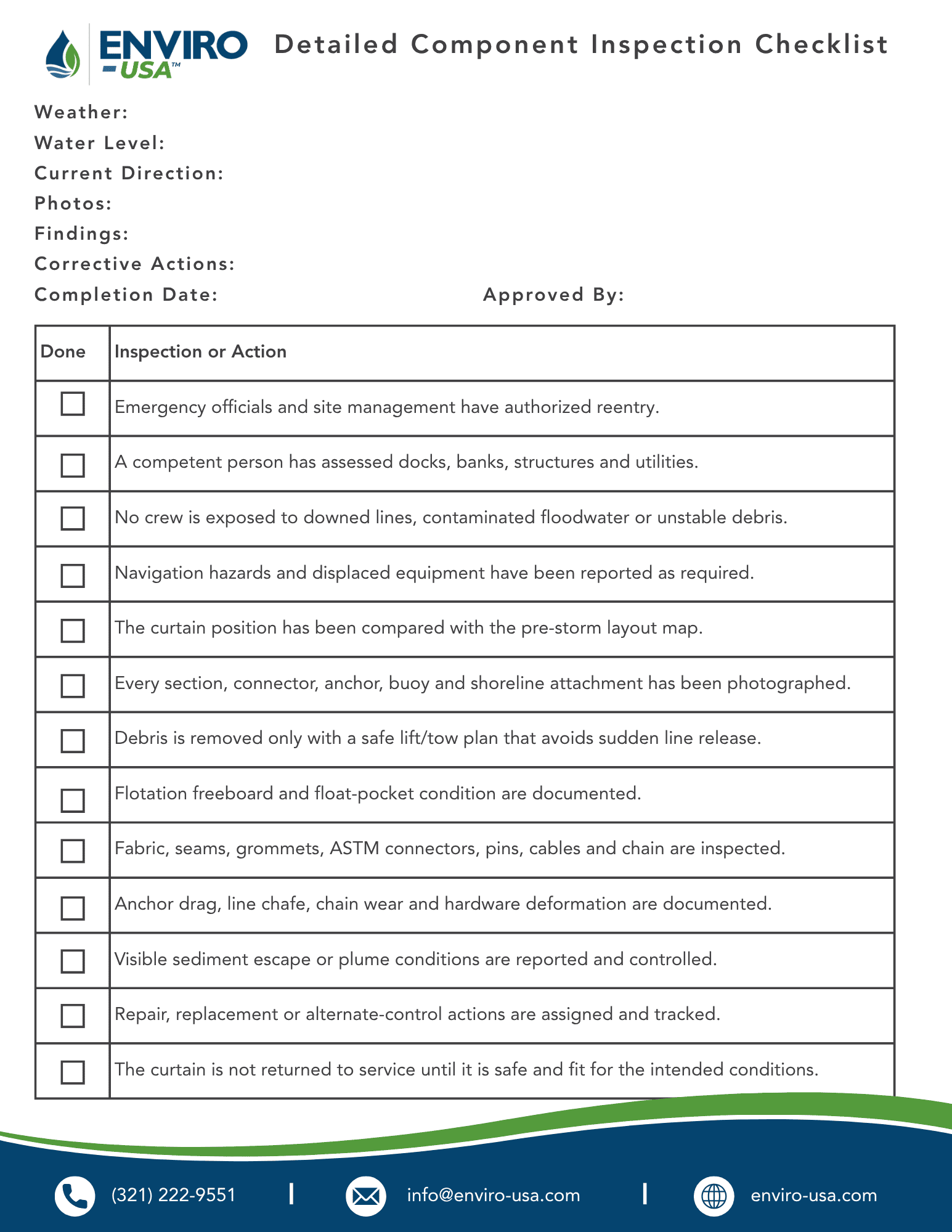
Once access is authorized, inspect systematically from one end to the other. Photograph every section, connector, anchor buoy and shoreline attachment. Record whether the curtain remains functional, requires routine maintenance, needs significant repair or should be replaced. EPA inspection guidance emphasizes documented observations, maintenance needs and corrective actions; it distinguishes minor upkeep from significant repair or replacement.
Download the Enviro-USA™ Detailed Component Inspection Checklist
Post-storm re-entry should end with a clear understanding of the condition of both the work area and the turbidity curtain system. Document damaged or displaced sections, inspect floats, connectors, anchor points, load-bearing components, skirt material, and mooring lines, and complete any necessary repairs or adjustments before normal operations resume.
Turbidity curtains are most effective when they are properly positioned, anchored, maintained, and monitored throughout the project, particularly following storms or increased flow and wind events. A thorough inspection and documented recovery process can help crews return to work more safely while restoring effective sediment containment and reducing the risk of additional damage, downtime, or environmental impact.
Read Other Related Blog Posts

How to Reduce Risk When a Turbidity Curtain Cannot Be Removed
How to Reduce Risk When a Curtain Cannot Be Removed No checklist can make an installed curtain hurricane-proof. [...]
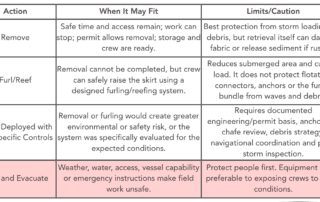
How to Determine Whether the Curtain Should be Removed
When severe weather threatens a marine construction or dredging site, deciding whether to remove a turbidity curtain requires balancing worker safety, permit requirements, sediment conditions and system capacity. Review the key decision factors, temporary removal process and storage practices to consider before a storm.

How to Inspect a Turbidity Curtain That is Already Installed
A turbidity curtain can look fine from a distance while hidden damage to anchors, connectors, flotation, fabric, seams, ballast, or [...]